
Home › Conditions we treat › Liver tumors (Y-90)
Targeted radiation that treats liver tumors from the inside.
Radioembolization (Y-90) delivers microscopic radioactive beads directly into the blood vessels feeding a liver tumor — concentrating treatment on the cancer while sparing healthy tissue. Our interventional oncology team works alongside your existing cancer care team.
- Interventional oncology specialists · part of your cancer care team
When Y-90 makes sense
Radioembolization is a minimally invasive option for patients with cancerous tumors of the liver that cannot be effectively treated by other means. It’s also called SIRT (Selective Internal Radiation Therapy) or simply Y-90, for the Yttrium-90 isotope in the beads.
- Primary liver cancer, or cancer that has spread to the liver
- Tumors that can't be removed surgically
- Patients seeking treatment that targets the tumor — not the whole body
- Referred by an oncologist as part of a coordinated cancer care plan
Radiation delivered exactly where the cancer lives
Radiation therapy isn’t new in cancer care. What makes radioembolization different is the delivery: microscopic radioactive spheres are injected through a catheter directly into the blood vessels that feed the tumor. Once in place, they emit radiation that kills the cancer — from inside it.
Because the Y-90 beads are targeted directly at the tumor, healthy liver tissue suffers minimal damage, and the treatment produces far fewer side effects than systemic radiation that exposes other areas of the body.
The radiation level of the spheres depletes naturally over about a month, so leftover particles can safely remain in place — no removal needed.
Your day, step by step
No surprises. Here’s exactly what happens before, during, and after.
Our interventional oncology specialists review your imaging and coordinate with your oncologist. A mapping procedure is typically done first to chart the liver’s blood vessels and plan the safest, most precise delivery. We verify your insurance benefits before anything is scheduled.
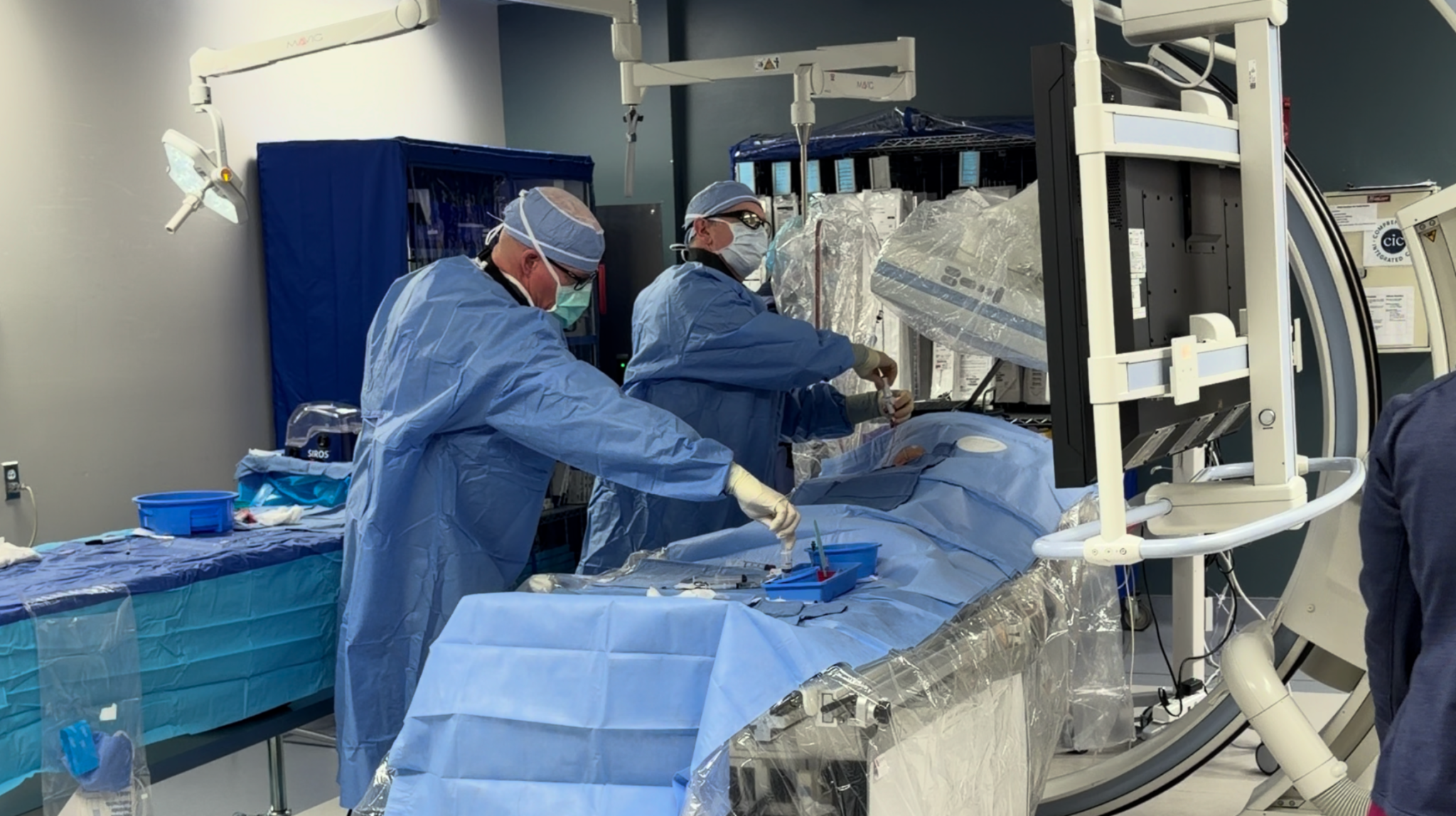
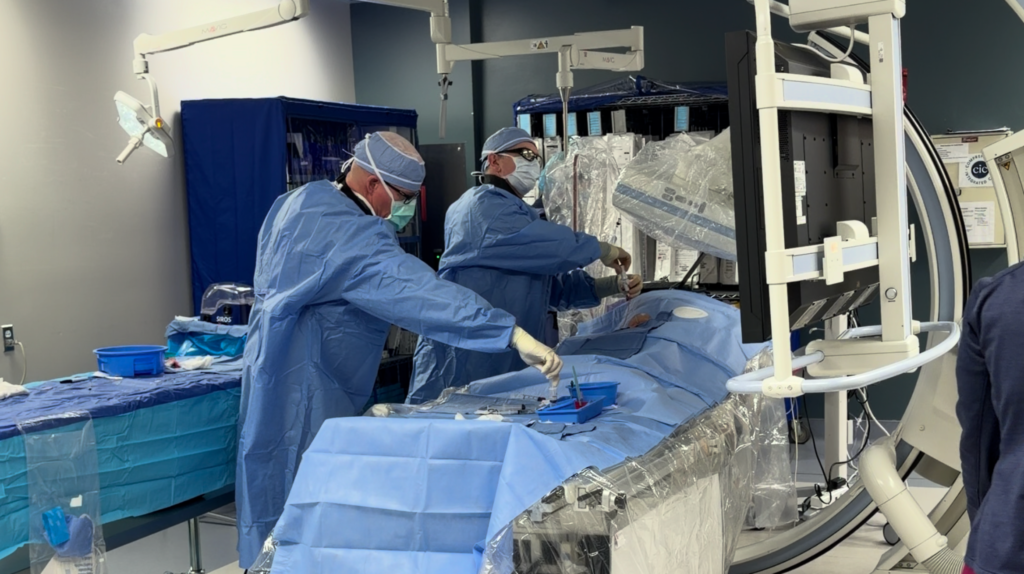
Through a tiny nick in the skin, your doctor guides a catheter to the artery feeding the tumor and delivers the Y-90 microspheres. You’re sedated and comfortable — no open surgery, no general anesthesia.
Most patients go home the same day or after brief observation. Fatigue for a week or two is the most common after-effect. The beads’ radiation depletes naturally over about a month, and your care team explains the simple, temporary precautions. Your oncologist receives a full report.
What this means for you
Precision over exposure
Radiation is concentrated inside the tumor itself — healthy tissue is largely spared, which means fewer side effects than whole-body approaches.
A team around you
Our interventional oncologists work as part of your existing cancer care team — treating the tumor where it lives while your oncologist directs the overall plan.
Minimally invasive
A catheter procedure through a nick in the skin — not surgery. Most patients are home the same day.
The things people actually want to know
The radiation is concentrated in the beads inside the tumor and fades naturally over about a month. Your care team will walk you through the simple, temporary precautions — for most patients they’re minimal.
No. Once their radiation has depleted, the microscopic spheres can safely remain in place permanently — no removal procedure is needed.
Y-90 is usually part of a bigger plan, not a replacement for it. Our specialists coordinate directly with your oncologist so each treatment plays its role.
Because the radiation targets the tumor rather than your whole body, side effects are generally far fewer than systemic radiation. Fatigue for a week or two is the most common.
Medicare and most major insurance plans cover medically necessary procedures like this one. And you won’t have to guess: we verify your benefits before anything is scheduled and tell you exactly what to expect, so there are no surprises.
More interventional oncology at CiC
Y-90 is one of several targeted, image-guided cancer treatments our specialists offer as part of your care team’s plan:
- Chemoembolization / drug-eluting beads
- Radiofrequency treatment of spinal metastases
- Preoperative embolization of tumors
- Port placement for chemotherapy
- Central venous catheter placement
One team, your team
Board-certified specialists in vascular, venous, and interventional care review every plan together — so you never feel handed off.
Whatever form your cancer has taken, you can count on the best care possible.
Ask your oncologist about Y-90 at CiC — or contact us directly and we’ll coordinate together.
Procedure: transarterial radioembolization (TARE/SIRT) with Yttrium-90 microspheres — superselective catheter delivery after pre-treatment mapping angiography and shunt evaluation; moderate sedation; same-day or short-observation discharge.
Consider referral for: unresectable HCC or hepatic metastases (e.g., colorectal, neuroendocrine) not amenable to other locoregional therapy, bridge-to-transplant candidates, and patients requiring tumor downstaging. Full IO service line also includes chemoembolization/DEB-TACE, RF ablation of spinal metastases, preoperative tumor embolization, and venous access (ports, CVCs).
Coordination: we operate as part of the patient’s existing oncology team — treatment planning, tumor-board input, and complete reporting back to the referring oncologist through the CiC physician portal.